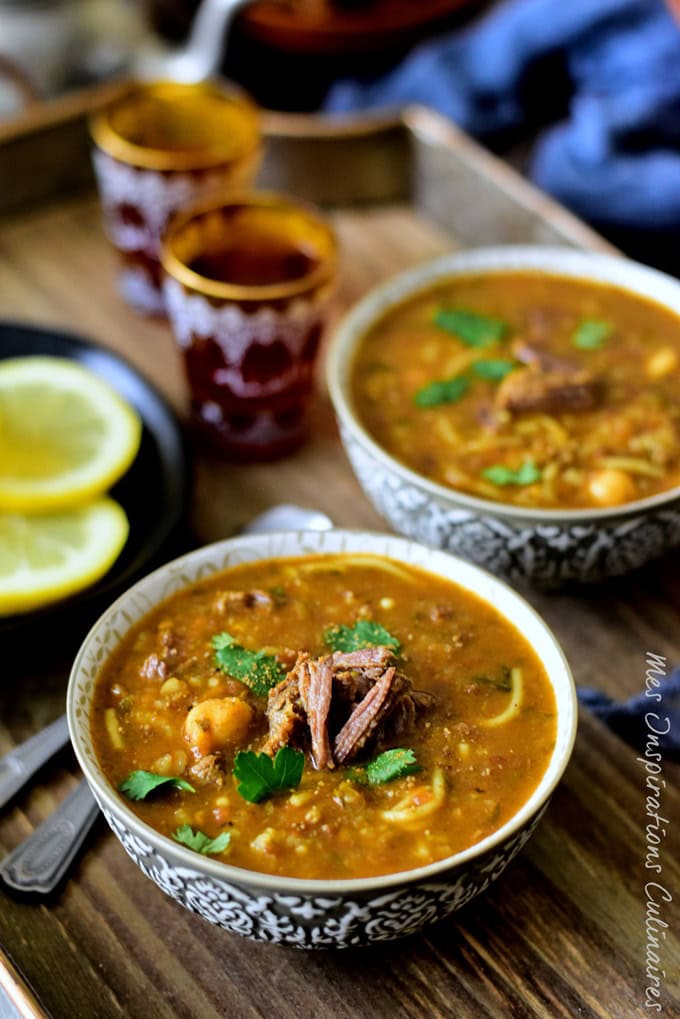
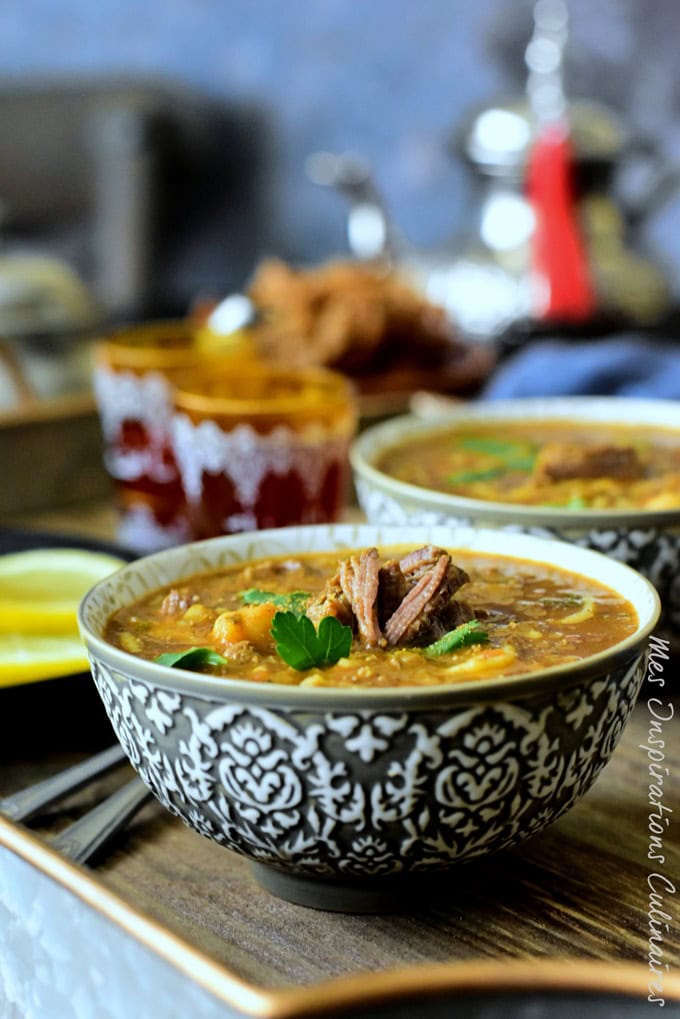
Moroccan harira, especially the version from the city of Fez, is a deeply flavorful soup, delicately scented with fresh herbs and generously spiced with ginger and cinnamon.
Made with tomatoes, chickpeas, and lentils, it stands out for its comforting texture and rich, warming taste.
This iconic soup holds a very special place during the month of Ramadan, when it is traditionally served to break the fast.
It is most often enjoyed with bourek and batbout bread, creating a nourishing and convivial meal shared around the table.
Moroccan Harira Soup From Fez
Moroccan Harira Soup Recipe
Harira is an iconic traditional soup of North Africa, with each country — and even each family — having its own version. Today, I’m sharing the Moroccan harira, made with tomatoes, lentils, and chickpeas, delicately scented with herbs and warm spices.
It is, without a doubt, the must-have soup of the month of Ramadan.
The word harira comes from Arabic and means silk, a reference to the soup’s smooth, velvety texture. This signature consistency is achieved thanks to the tedouira, a mixture of flour and water added at the end of cooking to thicken the soup.
Depending on the region, this tedouira may sometimes include yeast and be left to ferment for a day, as is the case with Oran-style harira.
Although harira is prepared throughout the year, it is deeply associated with the holy month of Ramadan, when it is traditionally served to break the fast, alongside other emblematic treats, most notably chebakia.
For many families, harira is far more than just a soup — it is a cherished tradition. A Ramadan meal is often considered incomplete without a steaming bowl of harira placed at the center of the table, a symbol of sharing, warmth, and togetherness.
I’ll admit it without hesitation: for me, the very best harira will always be my paternal grandmother’s Oran-style harira. It’s a memory deeply rooted in my heart, almost untouched by time.
Even today, I can close my eyes and recall that distinctive aroma filling the house as she prepared the tedouira, gently pouring in the starter she had left to ferment for hours under the sun.
And if I had to choose between harira and Oran-style chorba, my heart would unquestionably lean toward harira.
During Ramadan, I often asked my mother to prepare this beloved harira — generously spiced and richly flavored with ras el hanout, the spice blend that set it apart from soups of other regions.
As with many Maghrebi recipes, harira varies greatly from one household to another. Beef, lamb, or chicken is usually added to enhance the flavor, but it can just as easily be made without meat, resulting in a vegetarian version that is just as delicious.
Then there’s the question of texture. Some prefer harira light and brothy, while others love it thick, boldly spiced, and hearty enough to be served almost as a main dish during winter.
Unsurprisingly, it’s this generous, comforting version that I prefer — undoubtedly a direct inheritance from my grandmother’s unforgettable harira.
What are the key ingredients for a good harira soup?
Spices and herbs : Harira gets its depth and warmth from a generous blend of spices and fresh herbs. Ginger, cinnamon, and black pepper give the soup its signature richness, while plenty of fresh coriander, parsley, and celery are essential for an authentic, fragrant harira. Depending on family traditions and regional habits, vermicelli or rice are often added, bringing extra texture and making the soup even more filling.
Smen : Smen, or clarified butter, adds a unique, slightly fermented flavor to harira. While it is optional, it is highly recommended if you want to recreate the traditional, authentic taste of this iconic soup.
Lentils : Harira is a particularly nourishing and satisfying soup, largely thanks to the lentils it contains. Rich in plant-based protein and energy, lentils are especially important during the month of Ramadan, when the body needs strength and endurance to get through the day.
Preparing harira ahead of time
Preparing harira can seem time-consuming and does require some time in the kitchen. Fortunately, much of the work can be done in advance. Ingredients can be prepped ahead of time and even frozen, making the final cooking process much easier.
If you plan to serve harira regularly during Ramadan, I recommend preparing a large batch of the broth, without the tedouira, and dividing it into portions to freeze.
When reheating, simply add the vermicelli and prepare the tedouira to thicken the soup, allowing you to enjoy the same texture and flavor as freshly made harira.
Variations and adaptations
Like any traditional recipe, harira comes in many different versions:
Vegetarian harira : made without meat, yet just as flavorful
Thick harira : hearty and comforting, often served as a main dish during winter
Light harira : thinner and perfect as a starter
Each family has its own version, passed down from generation to generation.
Ingredients for Moroccan Harira
About 1½ cups lamb meat : Cut into small pieces. Adds a rich, deep flavor to the soup. (Can be replaced with beef or chicken, or omitted for a vegetarian version.)
1½ cups cooked chickpeas : Soaked overnight and cooked. (To save time, canned chickpeas work well—rinsed and drained.)
1 large onion : Finely chopped, it forms the aromatic base of the soup.
1 tablespoon smen (clarified butter) : Personally, I replace it with 1 tablespoon vegetable oil + 1 tablespoon margarine, which works just as well.
½ cup lentils : Preferably green or brown, they make the harira hearty and filling.
About 1½ cups fresh coriander, finely chopped : Essential for authentic flavor.
About 1½ cups fresh parsley, finely chopped : Adds freshness and balances the spices.
1 celery stalk (including leaves), finely chopped : For extra depth of flavor.
About 1¼ cups crushed tomatoes : Roughly 4 large juicy tomatoes, peeled and blended.
⅔ cup tomato paste : Enhances both color and flavor.
⅓ cup all-purpose flour : Used to make the tedouira, which thickens the soup.
1 teaspoon ground ginger : A key spice that brings warmth and character.
1 chicken bouillon cube : To boost flavor. (Optional.)
Salt, to taste : Adjust at the end of cooking.
A pinch of saffron : (Or turmeric, which I personally use.)
¼ cup rice : Adds texture and makes the soup more substantial.
About ¾ cup vermicelli or orzo : (Often called “bird’s tongue pasta”; I usually use vermicelli.)
Freshly ground black pepper, to taste
Tip : Adjust the consistency of the harira by adding a little water if needed, and taste to adjust the seasoning before serving.
How to Make Moroccan harira
Prepare the ingredients
Finely chop the onion, parsley, coriander, and celery.
Blend the tomatoes. (I use canned tomatoes; otherwise, blanch fresh tomatoes, peel them, then blend.)
Sauté the aromatic base
In a large pot, sauté the lamb cut into small pieces with a little fat.
Add the chopped onion, parsley, coriander, and celery, then let everything sweat over medium heat for a few minutes, until the aromas develop.
Add the spices
Stir in the salt, black pepper, ginger, saffron (or turmeric), cinnamon, and the chicken bouillon cube.
Mix well and let the spices bloom for a moment.
Add the chickpeas soaked overnight. (If using canned chickpeas, add them later, toward the end of cooking.)
Cook the broth
Pour about 2 liters (8½ cups) of water into the pot.
Bring to a boil, then reduce to medium heat and simmer for 30 minutes.
Add the legumes and tomatoes
Add the lentils and the blended tomatoes.
Cover and let simmer for another 20 minutes, allowing the flavors to blend beautifully.
Thicken the soup (tedouira)
In a bowl, whisk the flour with a little cold water until smooth.
Do the same with the tomato paste.
Gradually pour this mixture into the pot while stirring constantly for about 10 minutes, to prevent lumps.
Add the rice and vermicelli
Sprinkle in the rice and vermicelli.
Cook uncovered for about 15 minutes, stirring regularly, until the rice and vermicelli are tender and the harira has thickened.
How to serve Moroccan harira
Harira is almost a meal on its own, but it becomes even more enjoyable when paired with the right accompaniments.
Many families love serving it with dates, whose natural sweetness perfectly balances the soup’s warm, spiced flavors.
If you’re serving harira as a light dinner, consider pairing it with batbout bread, krachel, or almond briouats for a simple yet delicious meal.
During the month of Ramadan, heartier sides are often preferred, such as bourek filled with various fillings, or maakouda, those beloved potato fritters traditionally enjoyed at iftar.
Why is harira so beloved?
Harira is comforting, well-balanced, and energizing all at once. It provides everything the body needs after a long day of fasting: hydration, protein, fiber, and gentle, digestive spices.
More than just a soup, harira brings people together. It tells a story and instantly evokes memories of family meals shared around the table.
Conclusion
Traditional Moroccan harira is an iconic soup, rich in flavor and meaning.
Essential during Ramadan, it carries on through the seasons and generations without ever losing its popularity.
When prepared with care, it becomes far more than a dish—it turns into a true moment of sharing, warmth, and togetherness around the table.
Moroccan Harira Soup
Auteur : Samar
Traditional Moroccan harira soup made with lentils, chickpeas, tomatoes, and spices—comforting, nourishing, and perfect for Ramadan.
Samar Guira est l’autrice du blog Mes Inspirations Culinaires, dédié à la cuisine algérienne et méditerranéenne familiale. Passionnée de boulange maison, de recettes traditionnelles et de saveurs authentiques, elle partage des recettes simples, gourmandes et accessibles inspirées de son héritage culinaire et de ses inspirations du quotidien.