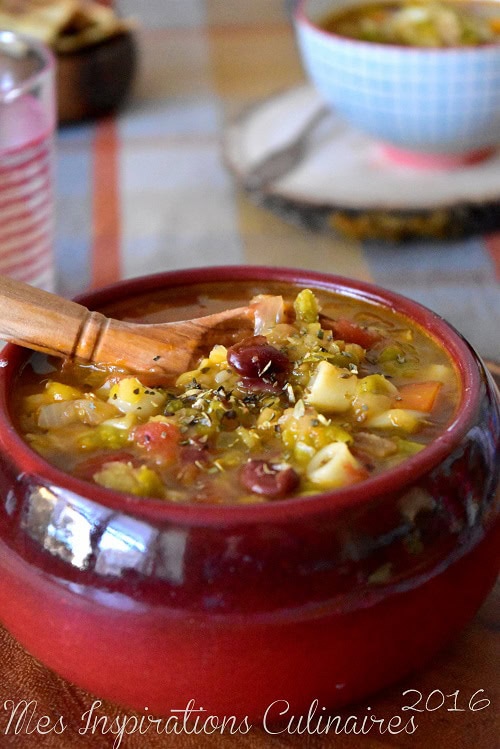
Minestrone is a hearty and comforting Italian soup, prepared with a tomato-based broth and enriched with pasta or rice.
Traditionally, it was a true “zero-waste” dish, created to make the most of leftover vegetables.
One of its greatest strengths is its flexibility. You can easily add any seasonal vegetables you have on hand—zucchini, green beans, or whatever is fresh at the market. This makes minestrone a soup you can enjoy all year long, simply by adapting it to the seasons.
Serve it piping hot with a slice of crusty bread, and you’ll have a nourishing, satisfying meal that perfectly captures the comforting spirit of Italian home cooking.
Classic Minestrone Soup
Minestrone is a hearty and satisfying Italian soup made with vegetables and pasta, or sometimes rice. There is no single, fixed recipe, as it naturally adapts to the seasons and to whatever vegetables are on hand—zucchini, carrots, celery, beans… everything has its place.
A true powerhouse of goodness, minestrone is packed with a wide variety of vegetables, providing fiber, vitamins, and antioxidants. It supports digestion, helps strengthen the immune system, and contributes to overall cardiovascular health.
The addition of legumes, such as beans, also makes this soup a valuable source of plant-based protein, resulting in a meal that is nourishing, balanced, and deeply satisfying.
It’s often said that Borlotti beans are essential to a truly authentic minestrone. Naturally, that’s exactly what I chose to add to my Italian soup—to stay as close as possible to tradition… and, I have to admit, for the flavor too.
Each region of Italy has its own take on minestrone. In the north, it often features cabbage and rice, while in the south, Mediterranean vegetables such as courgettes take center stage, enhanced with fragrant aromatic herbs.
A regional dish with a thousand faces
Each region of Italy has its own interpretation of minestrone :
In the north, it is often prepared with cabbage, potatoes, and rice.
In central Italy, root vegetables and legumes play a starring role.
In the south, Mediterranean ingredients such as zucchini, tomatoes, beans, and fragrant herbs take center stage.
Despite these regional variations, the foundation remains largely the same : onions, carrots, celery, and tomatoes, with pasta, rice, or beans added according to local traditions.
This flexibility is what makes minestrone soup so unique and deeply rooted in Italian cuisine.
By adapting to the seasons, regional traditions, and locally available vegetables, minestrone offers endless variations and a different tasting experience with every preparation, making it a timeless and authentic Italian dish.
A powerhouse of health benefits
Minestrone soup is as nourishing as it is flavorful, making it a staple of healthy Italian cuisine.
Rich in fiber, it supports digestion, while the wide variety of vegetables provides essential vitamins and antioxidants.
The addition of legumes supplies valuable plant-based protein, contributing to a well-balanced and satisfying meal.
Naturally low in fat, minestrone helps support cardiovascular health and fits perfectly into a wholesome, everyday diet.
To prepare an authentic and delicious Italian vegetable soup, it is essential to use fresh, seasonal vegetables, which enhance both flavor and nutritional value.
The key ingredients of minestrone
While highly adaptable, a good minestrone soup is built on a few essential ingredients that form its signature flavor and texture.
The aromatic base starts with : onions, carrots, and celery, followed by chopped or puréed tomatoes.
Seasonal vegetables such as : zucchini, green beans, potatoes, or cabbage are then added, depending on availability and preference.
Legumes play an important role, with : kidney beans, white beans, or Borlotti beans commonly used.
Short pasta or rice adds heartiness, while Italian herbs like basil, oregano, and thyme bring the dish together with their fragrant notes.
Borlotti beans are often considered indispensable in a traditional Italian minestrone, and they are the ones I use to stay as close as possible to the authentic recipe—both for tradition and for their rich, slightly nutty flavor.
When I lived in Canada, I often bought minestrone soup—yes, I’ll admit it! Between work and everyday commitments, time in the kitchen was sometimes limited, and I mainly saved cooking for the weekends.
Canadians truly love this soup, and I eventually started making it at home using special minestrone mixes of dried beans, typically including kidney beans, split peas, and pasta.
Of course, dried or fresh beans can be used, but canned beans are a real time-saver, especially for a busy weeknight dinner. That’s exactly what I love about minestrone: it’s light yet hearty, nourishing without feeling heavy, and perfectly suited to everyday meals.
Onions, carrots, and celery bring depth and flavor to the soup, while the pasta and beans create a thick, comforting texture. And for the finishing touch, nothing compares to a sprinkle of freshly grated Parmesan just before serving… pure comfort in a bowl!
This soup is both delicious and incredibly versatile
It’s hearty, easy to prepare, and budget-friendly, making it ideal for everyday meals.
You can adapt it to seasonal vegetables and whatever ingredients you have on hand, without ever overcomplicating things.
It also keeps very well in the refrigerator and freezes beautifully, making it a perfect ally for busy weeks.
For this soup, you will need :
Onions, carrots, and celery : These vegetables form the aromatic base of the soup. Sautéing them in olive oil helps build deep, rich flavor.
Garlic : Adds an extra layer of aroma and enhances the overall taste.
Tomatoes : Bring a gentle sweetness and a pleasant tang to the broth.
Beans : White or red beans work perfectly, adding heartiness and plant-based protein.
Pasta : Small pasta shapes, such as shells, are ideal. Cooking them directly in the soup releases their starch, naturally thickening the broth.
Herbs and spices : Dried oregano and basil are classic choices. You may also add bay leaf, thyme, or other Italian herbs if desired.
Vegetable broth – Use homemade broth for the best flavor, or a good-quality store-bought version to save time.
For an even more hearty and nourishing version, lentils can also be added to the soup.
Classic Minestrone Soup
How to Prepare Minestrone Soup
Preparing the Aromatic Base
In a large pot or heavy-bottomed saucepan, heat the olive oil over medium heat.
Add the chopped onion, diced carrots, and thinly sliced celery.
Sauté gently, stirring regularly, until the vegetables are soft and slightly translucent.
This step is essential for building a deep, flavorful base for the soup.
Flavoring the Soup
Add the minced garlic and cook for about 30 seconds, just until it becomes fragrant, being careful not to let it brown.
Season with dried oregano and basil, then stir well to evenly coat the vegetables and release their aromas.
Adding the Liquids
Stir in the chopped tomatoes, then pour in the chicken or vegetable stock.
Mix well and bring the soup to a gentle simmer.
Let It Simmer
Once simmering, reduce the heat, cover the pot, and let the soup cook gently for about 15 minutes.
This allows the flavors to blend and develop fully.
Adding the Beans and Pasta
Add the drained beans along with the pasta or minestrone mix.
Continue cooking uncovered or partially covered, stirring occasionally, until the pasta is tender and the beans are fully heated through and cooked.
Finish and Serve
Taste the soup and adjust the seasoning if needed with salt and pepper.
Serve piping hot in bowls, then garnish with freshly grated Parmesan cheese and a sprinkle of chopped fresh basil just before serving.
Classic Italian Minestrone Soup
How to Serve Minestrone
Serve minestrone with a slice of crusty bread or a handful of croutons to add a pleasant crunch.
Just before serving, finish each bowl with a drizzle of olive oil or a sprinkle of freshly grated Parmesan cheese for extra flavor.
A hearty and convivial soup
Minestrone is a dish meant to be shared. It brings people together around the table, warms both hearts and homes, and perfectly captures the convivial spirit of Italian cuisine.
Light yet satisfying, simple yet full of flavor, it adapts effortlessly to every season and every family, making it a timeless comfort food.
Conclusion
Minestrone is proof that simple cooking can be incredibly rich in both flavor and health benefits.
Affordable, simple to prepare, and endlessly versatile, this Italian soup earns its place in our kitchens throughout the year.
Whether enjoyed in winter to warm and comfort, or prepared in a lighter version with summer vegetables, minestrone remains a timeless, reassuring, and authentic dish—one that never fails to bring warmth and satisfaction to the table.
Discover how to make authentic Italian minestrone soup with vegetables, pasta, and beans. A healthy, hearty, and comforting recipe to enjoy all year round.
1/2cuppastaI used a small minestrone mix with pasta, kidney beans, and split peas
1Canned red lentilsif not using a dried legume mix
1cupsplit peas
1/3cupgrated Parmesan cheese
Fresh basil
Instructions
In a large pot or heavy-bottomed saucepan, heat 2 tablespoons of olive oil over medium heat. Add the chopped onion, celery, and diced carrot. Sauté for a few minutes, stirring regularly, until the vegetables soften and become translucent.
Add the minced garlic and cook for about 30 seconds, just until fragrant, being careful not to let it brown. Stir in the dried oregano and dried basil to release their aromas.
Add the crushed tomatoes and pour in the chicken or vegetable broth. Stir well and bring the soup to a gentle boil. Once it starts to boil, reduce the heat, cover, and let it simmer for about 15 minutes, allowing the flavors to blend.
Add the dried legumes and the pasta, or the minestrone mix. Continue cooking, stirring occasionally, until the pasta is tender and the legumes are fully cooked.
Taste the soup and adjust the seasoning with salt and pepper if needed. Ladle into bowls and garnish with freshly grated Parmesan cheese and chopped fresh basil before serving
Samar Guira est l’autrice du blog Mes Inspirations Culinaires, dédié à la cuisine algérienne et méditerranéenne familiale. Passionnée de boulange maison, de recettes traditionnelles et de saveurs authentiques, elle partage des recettes simples, gourmandes et accessibles inspirées de son héritage culinaire et de ses inspirations du quotidien.